Most tools were built to avoid complexity. Singularity was built to absorb it.
A platform the program doesn’t outgrow.
Every capability here came from a real program that needed it, not a product roadmap that anticipated it.
Get a demo →Two kinds of systems
One looks good in a demo.
One works when you bill customers.
Most tools track certificates. They don’t run the program: the rules, the customer structures, the approval chain, the methodology. That logic lives in one person’s head, and nowhere when the team changes.
Singularity runs the program. The certificate tracking follows.
Inventory & reconciliation
Know what you have.
Ask any vendor how their platform handles null power. Most systems only track the certificate inventory. They don’t have a second inventory to reconcile against, so the mismatch is invisible until something goes wrong.
Most platforms track one inventory. Singularity tracks two: the certificate inventory and the generation inventory: every MWh in the physical portfolio by source and certificate status. Reconciling them is where the gap hides. Singularity surfaces it before it reaches the compliance report.
Show capabilities
Program operations
Run your programs.
Ask any vendor to demonstrate configuring a new program type, without their implementation team in the room. A configurable platform shows you. A services dependency schedules a call.
The certificates are the output. Most tools track the output. Singularity runs the program that produces it: the rules, customer structures, approval chain, and methodology. When your team turns over, the rules stay in the system.
Show capabilities
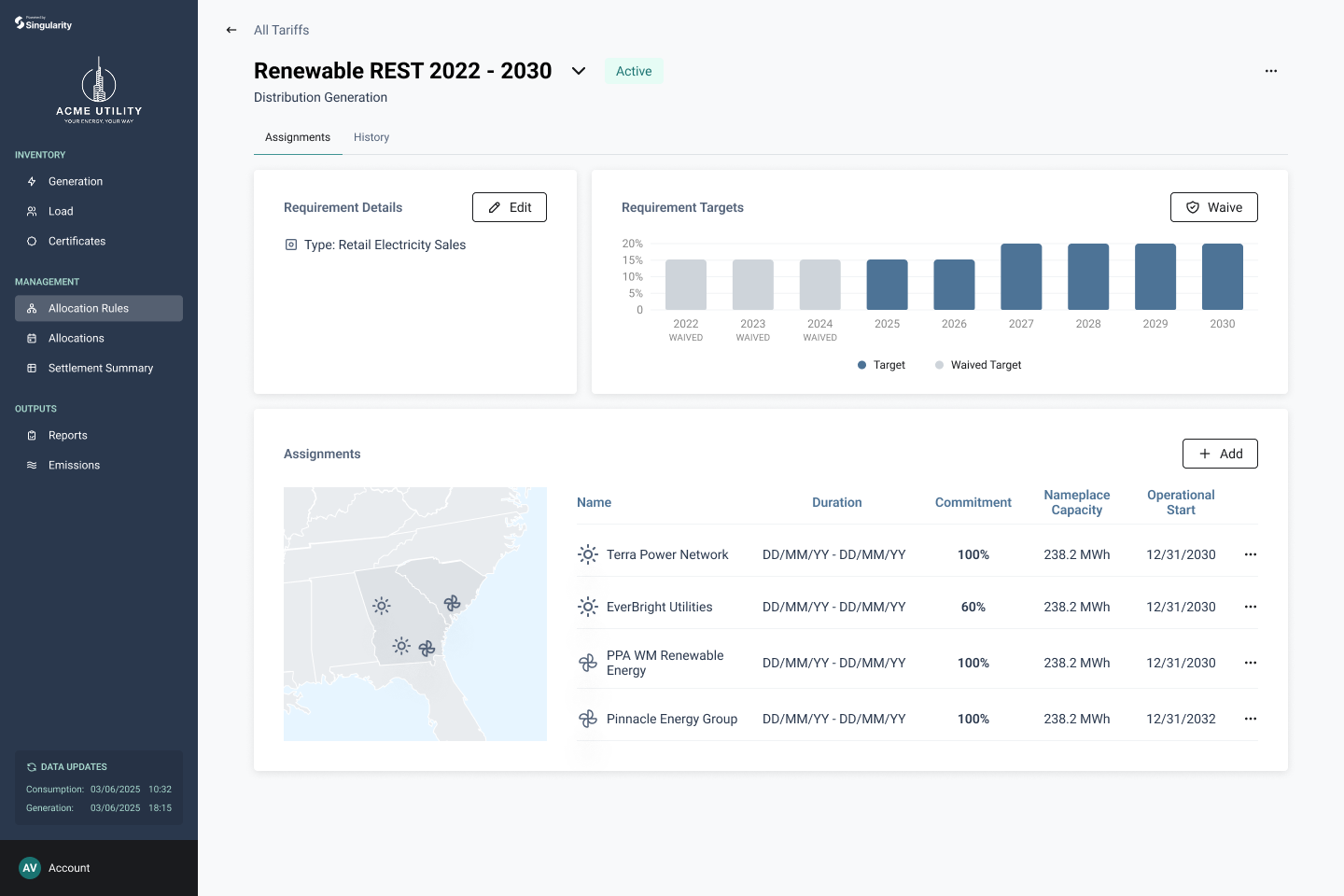
Allocation engine
Know who gets what.
When compliance and voluntary programs run from the same inventory, the same REC can touch both tracks. Double counting isn’t a theoretical risk. Ask any vendor to walk through how theirs prevents it on a live program.
Compliance and voluntary programs draw from the same inventory but follow different rules. Singularity’s allocation engine runs both simultaneously, prevents double counting, and settles each decision with a timestamped record. The same engine projects forward: REC position before you’ve committed to anything.
Show capabilities
Reporting & retirement
Meet your obligations.
FASB ASU 2026-02: REC records are now balance sheet assets subject to external audit. A spreadsheet won’t survive the documentation requirements auditors will bring. Effective for fiscal years beginning after December 15, 2027 for public entities.
Most reporting tools export a number. Singularity documents how it was produced: which generation, which certificates, which customers, which methodology, who approved each step. That’s what holds up when a regulator or auditor asks.
Show capabilities
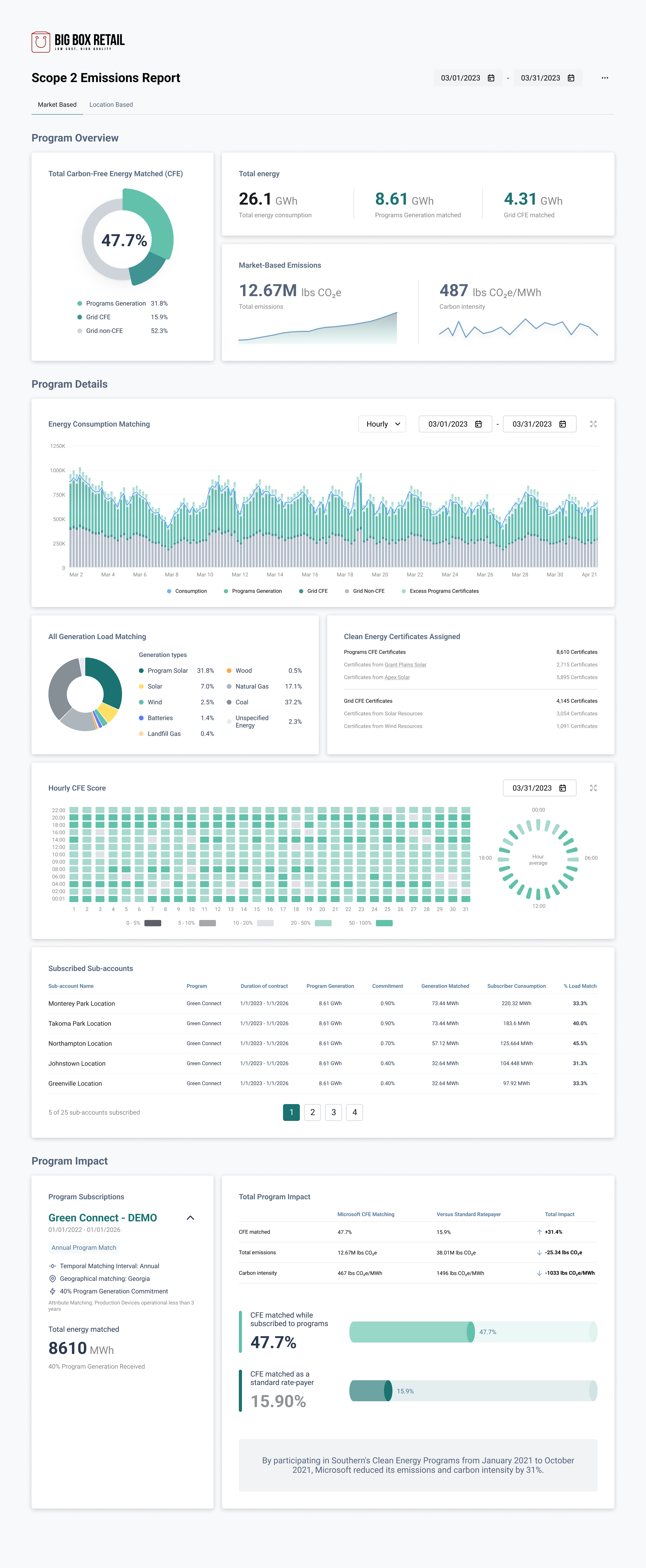
Field experience
Running live at utilities and grid operators across programs that don't fit the same mold.
Southern Company, APS, and Evergy run their clean energy programs on Singularity. MISO and SPP run GHG tracking across entire market footprints on the same platform. Running programs across different commitment structures, carbon methodologies, and compliance environments surfaces requirements no design document anticipates. That’s what’s built into the platform.
“The platform that Singularity helped develop provides customers with hourly energy and emissions data, as well as an overall picture of their sustainability metrics not previously possible.”Cam Hardin, Director of Customer Solutions, Georgia Power
One system. Three audiences.
What the program delivers, for everyone who needs it.
Your team, regulators, and customers all draw from the same underlying data, without separate systems to maintain or exports to reconcile.
Your team
One system your program doesn’t outgrow.
Everything from certificate configuration to compliance reporting in one place, not spread across spreadsheets and manual exports. When the analyst who built the workflow leaves, the methodology stays. Programs built on Singularity start further along and scale without a rebuild.
Your regulators
Every decision documented. Every step traceable.
One auditable record from certificate issuance through compliance filing. REC inventory audit-ready under FASB ASU 2026-02. The methodology lives in the platform, not in a person. When someone asks, the answer is already there.
Your customers
The reporting layer your largest customers are asking for.
Model CFE impact for prospects before a contract is signed, using real generation data. Once they sign, the same system becomes their reporting layer: verified hourly matching, source breakdown, and program attribution on demand. Not a separate product. The same record.
Your program isn’t getting simpler. This is the platform built to run it.
Ready to see it on a real program?
One system of record, built to run the program. We’ll walk through how Singularity applies to your program structure. 30 minutes, no sales deck.
Get a demo →